Recyle & Textill Solution
#1 Place For Your Textill Solution
EKO-TEKS GROUP LLC Skopje, in accordance with Article 29, Paragraph 13 of the Waste Management Law, implements the system for the collection, transport, storage, and treatment of waste through contracts with domestic legal entities that hold valid permits for collection and transportation, processing, recycling, and disposal of waste issued by the competent authorities in the Republic of North Macedonia.
EKO-TEKS group Ltd, was founded on August 1, 2023, and obtained a license for the management of textile waste issued by the Ministry of Environment and Physical Planning.
EKO-TEKS group Ltd. is a company that promotes, coordinates, and finances activities for the collection, sorting, and recycling of textile waste.
EKO-TEKS group Ltd is open to cooperation with all companies that have a legal obligation to establish a system for managing textile waste (producers and importers of textile products).
EKO-TEKS group Ltd is a company with the main activity of managing textile waste according to the "polluter pays" principle and in accordance with the Law on the Management of Special Waste Streams in order to meet national environmental goals and government policy.
According to the Law on the Management of Special Waste Streams, which entered into force on September 17, 2021, all companies that manufacture or import textiles have an obligation to organize a system that collects and recycles their textile waste that occurs after consumption of their products by final consumers.
The obligation under Article 17 of this law applies only to a producer who annually places on the market or imports into the Republic of North Macedonia more than 10 kg of textiles
Eko Teks selects partners for transport and recycling based on a valid permit/license issued by the environmental authority.
EKO-TEKS group Ltd commits to establishing a comprehensive system for managing textile waste in line with environmental protection principles, the relevant regulations of the Republic of Macedonia, and international standards. To achieve this, we will allocate the collected funds to licensed waste gatherers who will separate commercial waste from municipal waste and conduct a meticulous selection process. The selected textile waste will then be pressed into special packaging, making it ready for recycling or energy recovery. Furthermore, our company will actively engage in educational campaigns to raise awareness among the public about the proper disposal of textile waste. We will encourage people to utilize specially marked containers for storing this type of waste. Additionally, EKO-TEKS group Ltd will collaborate with all municipalities in our territory to collectively promote a cleaner environment and foster a culture of responsible waste management.
By law, your company is required to submit monthly reports prepared on the basis
of product specifications and sales reports for that month.
Manufacturing specifications
– Information on the amount of textile waste generated by a product/article.
Monthly reports
– Information on the total values of the released textile waste in the country
for all products. The report shall be submitted by the 15th of
the month for the previous month.
Waste represents a global problem with significant implications for the economy, the environment, and the overall quality of life. The traditional economy based on the principle of "take, make, use, dispose, and pollute" is being abandoned by many countries, replaced by the new regenerative approach known as the circular
economy—a closed-loop process that manages waste at every stage to minimize, recycle, and reuse.
Starting from January 1, 2024, the Law on the Management of Additional Waste Streams comes into effect. This law regulates environmental protection requirements and health considerations by preventing or reducing the negative impact of generating and handling waste from textiles, tires, oils, and vehicles. These requirements are applicable during the production of textiles, tires, oils, and vehicles, as well as the collection, reuse, treatment, processing, and disposal of waste generated from these items throughout their lifecycle.
This law introduces significant changes in waste management practices and imposes substantial obligations on producers, consumers, and local authorities. It aims to prevent the creation of textile waste, prohibit its incineration, and establish procedures for the disposal of textile and tire waste by retailers. The law also imposes responsibilities on mayors and "end users who generate textile waste" to separate and store generated textile waste separately from mixed municipal waste or other types of waste and deliver it to retailers, waste collectors, or collection centers.
As a national target set in the law, an optimistic goal for textile waste collection by 2026 is 15%.
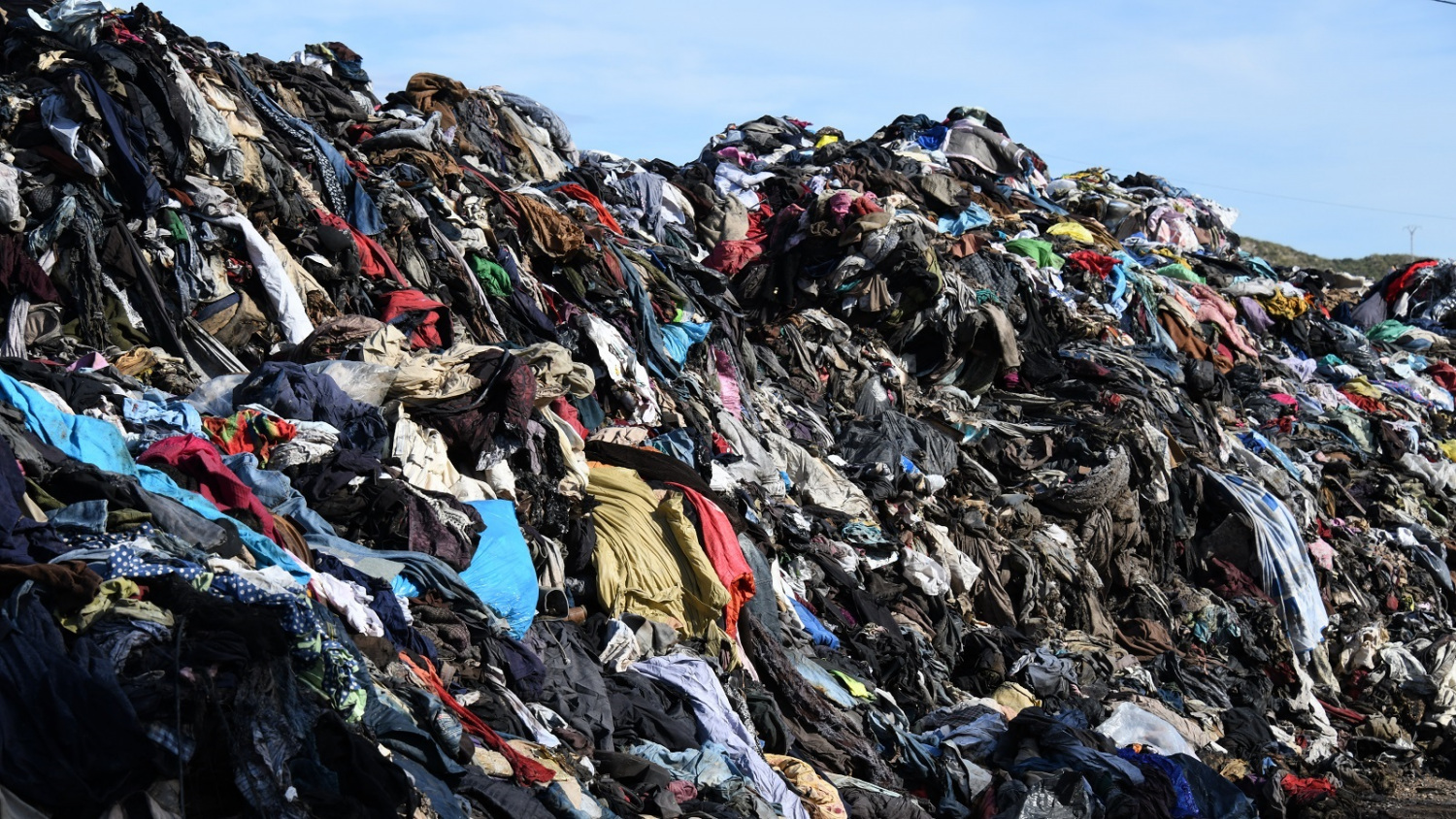
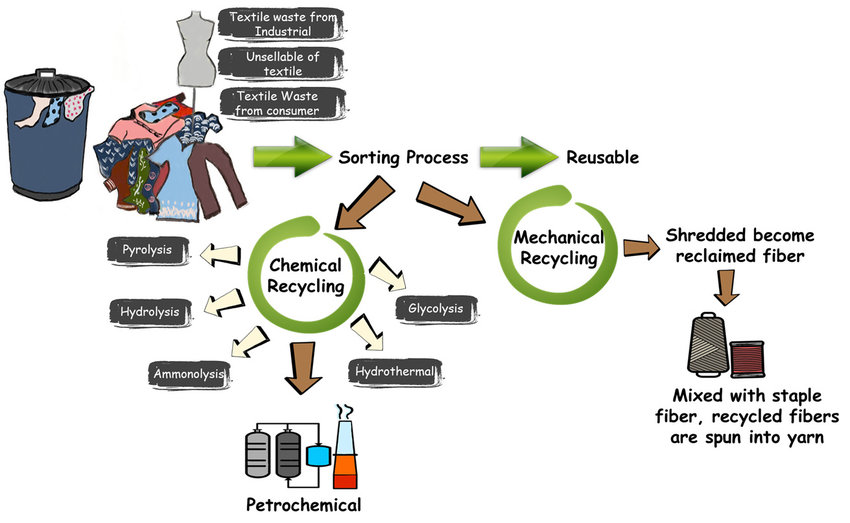
Textile recycling refers to the process of reusing or repurposing textile materials to prevent them from ending up in landfills or incineration. It is an essential aspect of sustainable waste management and a step toward reducing the environmental impact of the fashion and textile industries. Textile recycling can involve various methods and techniques to extend the lifecycle of textile products and reduce the demand for new raw materials.
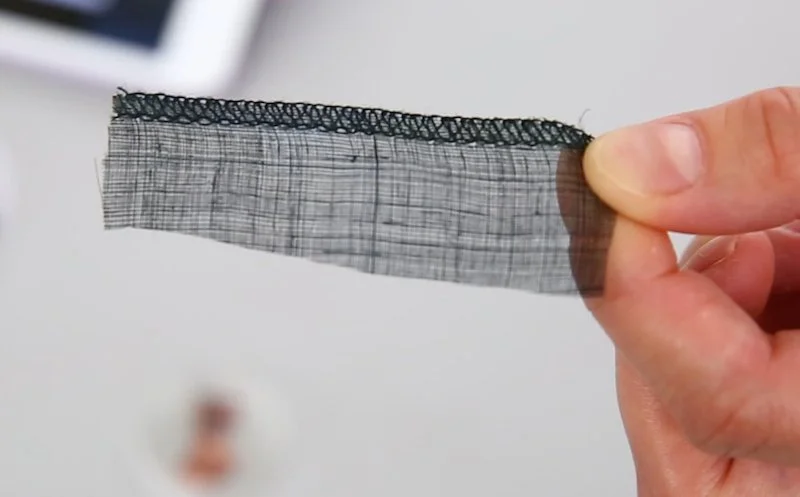
Researchers have been working on integrating photovoltaic materials into textiles to create "solar textiles" or "solar fabrics." These textiles are designed to harness solar energy and convert it into electricity. Solar textiles could be incorporated into clothing, tents, awnings, or other fabric-based structures, providing a portable and flexible energy generation solution.
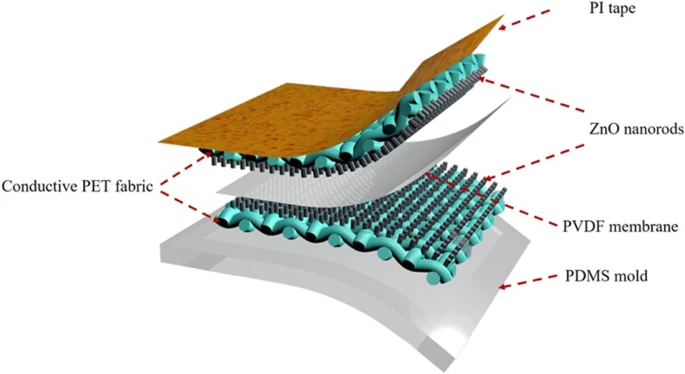
Piezoelectric materials generate electricity when subjected to mechanical stress or vibration. Scientists have been studying the integration of piezoelectric fibers or materials into textiles. The movement or vibrations caused by body motion, wind, or other forces can potentially generate electrical power through these textiles. This could lead to self-powered wearable devices or energy-harvesting systems integrated into clothing.
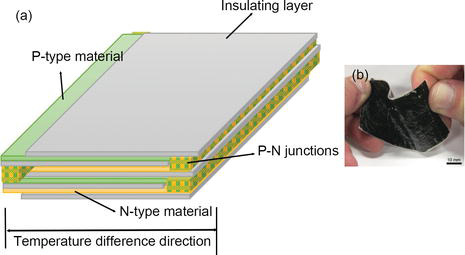
Thermoelectric materials can generate electricity from temperature differences. By integrating thermoelectric modules into textiles, it might be possible to convert body heat or temperature gradients into electrical energy. This concept could be useful for wearable devices that require power or even energy-efficient heating or cooling systems.